Archive

Sunday, 21 April 2019

Kakehashi2018: Great to learn


In January, I had a great opportunity to visit Japan through a program called “Kakehashi Project”, funded by JICE (Japan International Cooperation Center). Kakehashi, means bridge in Japanese, indicated that the program is a bridge between Japan and other countries. The purpose of this program is to make lifelong friendships, develop lasting connections with Japan and tell our friends and families about our experiences in Japan. Most importantly, is to encourage an understanding of Japan and convey information about Japan to the public through participants of this project.

There were plenty of pleasant experiences throughout our trip. One of them is homestay. Before we met our homestay family, me and the other 2 girls were a little intimidated because we knew nothing about the family and we only knew that they a couple in age 71. We concerned our age differences and worried that we might have some barriers in communication. However, all the worries were gone as soon as we met them. The couple was super nice and welcoming. We spent the most wonderful two days with them, and I learned a lot about Japanese cultures. Other than learning cultures, we also got to know Japanese society more on micro-level. Unlike what we learned in Canada’s classroom, we actually got a chance to learn what is like to live in Japan and be familiar with Japanese’s daily lifestyle.

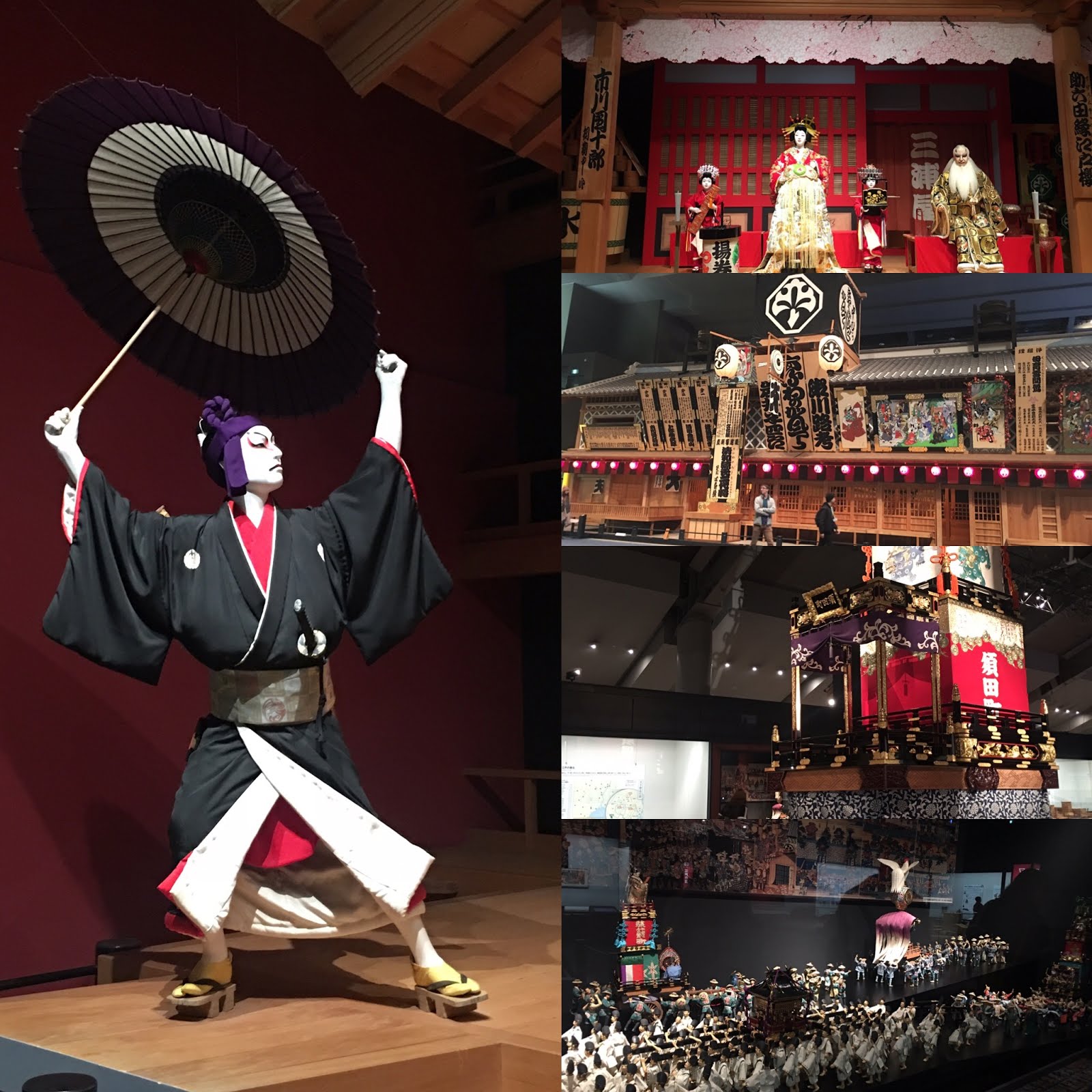
Besides homestay, we also visited some museums such as Edo Tokyo museum and Hokkaido museum. I’ve always had great interest in different kind of museums, therefore it was such a wonderful experience for me when we visited these museums. In these museums, I learned more about Japanese history and traditions. It was awesome to see how Japan developed economically and politically. And it was also great to see how Japanese people lived their life throughout the times. Everything we saw in the museums was all fascinating to me.

I’m so glad that I participated this program and truly honoured that I could show people what I’ve experienced and learned in Japan. Till today, I will still share my experiences with people I met. This trip also makes me want to visit japan couple more times just because I think there are more for me to explore in Japan.
See you! Japan!

Sunday, 4 June 2017

Long-lasting Festival

By Shawn


Do you know that Japan is said to be having between 100,000 and 300,000 festivals! It is such a large number. It also shows in Japan how popular festivals are. During my time in Tokyo, I was so lucky to have a chance to visit Asakusa while Sanja Festival was being held.


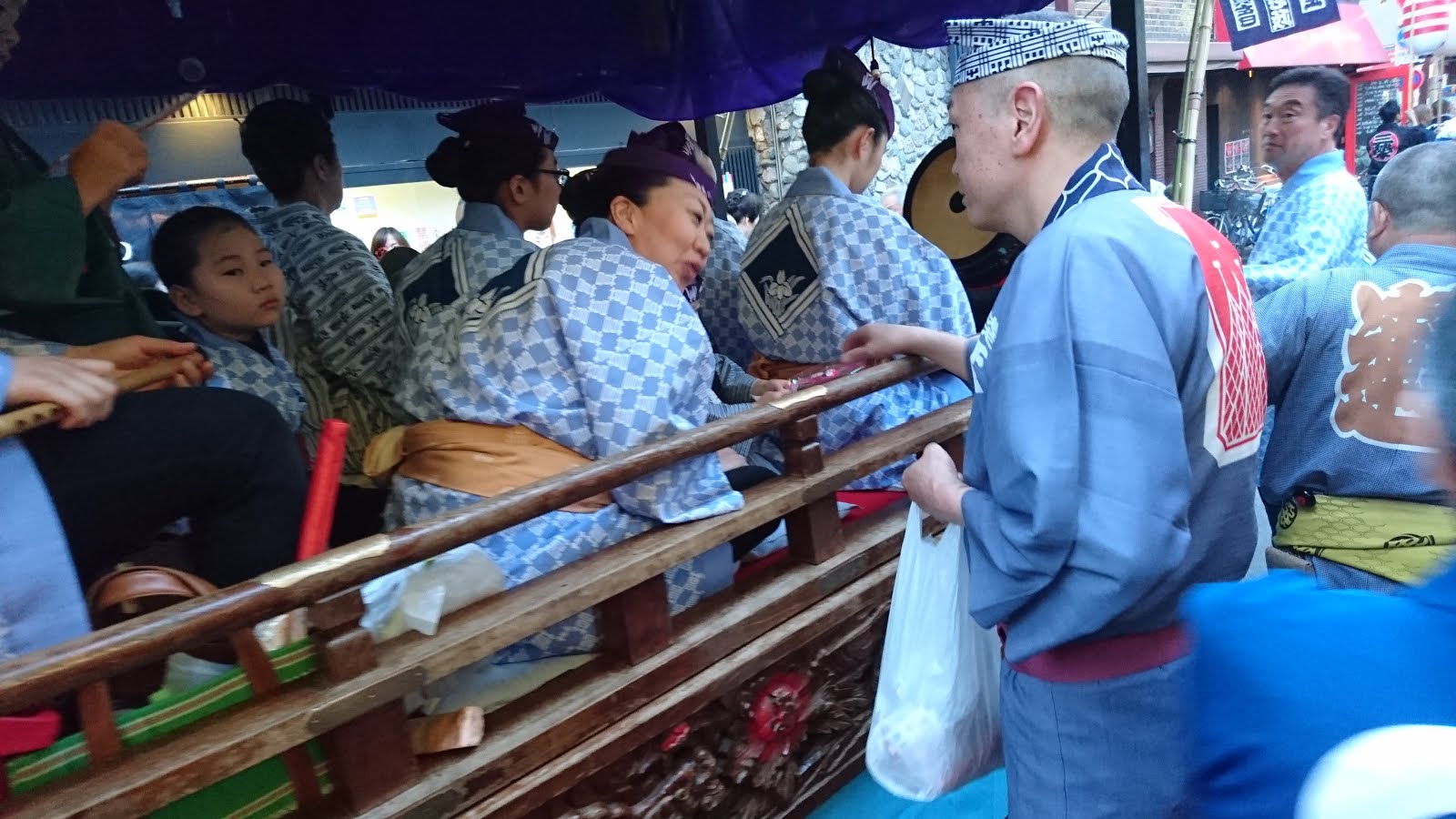
Sanja Festival is famous for its craze. More than a million people including travelers from all over the world come to take part in Sanja Festival every year. I believe many people have an image of carrying mikoshi(portable Shinto shrine) and yelling through the streets about Japanese festivals. This usually being considered as beautiful and solemn excepting Sanja Festival. It is expected that people will compete for the pole position there because carrying gods is a great honor. However, fun should be the most important reason as it is a Festival! Unfortunately, I did not see this famous scene though I did not get into any trouble. What I could see was people of different ages and different races were enjoying the same festival peacefully. It was because police were also there?

That is not for eating!


Same as other festivals in Japan, there are lots of market stalls selling different kinds of snacks and drinks in Sanja Festival. They included something is filling like the nikumakimochimochibou(rice wrapped in meat) we mentioned in “Street Eats”, is world famous like takoyaki, is something fancy like bubble tea in a light bulb style bottle, etc. They are all look so good and designed to be consumable while walking. Nevertheless, in my opinion, the most attractive parts of these market stalls are we can watch how they prepare the food right in front of us and have a short conversation with them. I love eating, and the cooking process of how a skillful cook can convert raw food into a delicious meal in such a short period of time is really an excellent performance to me. The short conversation during the waiting time also makes market stalls a lot warmer.


Can you see the beer?
Sanja Festival has been holding for more than 700 years. During this 700 years, Sanja Festival was even changed from being held by both Sensoji and Asakusa Shrine together to be being held by Asakusa Shrine solely. From combining elements of Shinto and Buddhism to Shinto alone, seems did not change people’s love of Sanja Festival at all. I believe the origin of many Japanese festivals is mostly because of some religious reasons, but the core and the reason why a Japanese festival is such attractive and long-lasting would probably be it provides connections and pleasure to everyone participating it.

Locus of Passion

As the most populous city on earth, Tokyo is a nexus of art and cultural interchange. Having this distinction, the streets are home to all sorts of interesting street performers. Walking through some of the more vibrant areas of Tokyo, I was able to find numerous examples of people demonstrating their unique talents through street performances. This lead me to research some other interesting acts that have cropped up in Tokyo.


In Ueno Park an interesting duo of concert trained artists, Natsu and Kayo, play marimba duets.


The marimba itself is relatively unwieldy and is not the type of instrument that can be easily moved, so Natsu and Kayo play under the graces of the “Heaven Artist” program that sanctions a limited number of street performers a year. Admission in to the program is competitive with only around 20 applications out 300 entries being selected per year.

Many talented artists prefer to use the street as their stage, the connection between audience and performer is often stronger than in more regimented venues.

Shibuya, again proves itself to be a hotbed of street culture. The scramble and immediate vicinity are prime spots for performers.

IMG_20170529_211601_DRO.jpg
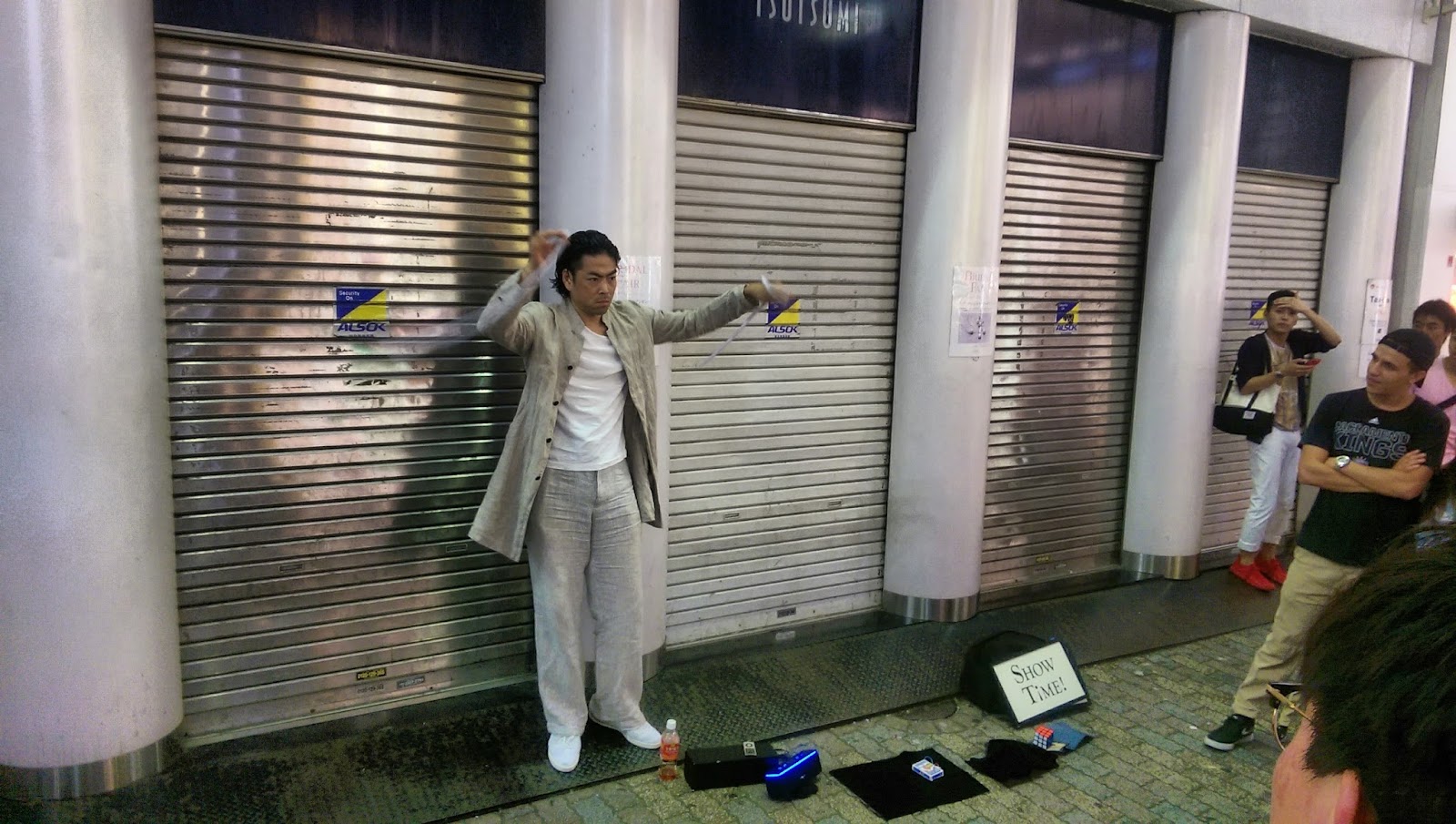
a multitalented performer juggles and performs slight of hand illusions
IMG_20170512_205437_DRO.jpg
a lone guitarist plays against the din of the city


Those looking to draw a crow are locked in a competition for the attention of passers by as thousands of advertisements and lights all vie to be noticed by the multitudes of pedestrians. The large number of visitors to some sites in Tokyo allow larger acts to be sustained, such as this rap group that I saw one humid night.


Tokyo is well known for its extravagant traditional festivals, such as this year’s Sanja Matsuri, but there are also festivals for more individualized performances. The Koenji Street Performance Festival takes place in late April and hosts an eclectic mix of comedy, dance, strength, and precision based acts. This type of festival is very reminiscent of the Buskers festival at which I spent many summer nights in Halifax, and it is unfortunate that I missed it by two weeks.

caption unrelated


As I continue my travels beyond the Senshu program I hope that I am able to find many interesting slivers of creativity and expression in street performance.


- Denver Clarke


Written by Yu Han

  Since this is our last blog, I want to address something different today. Rather than talk about the urban street culture as usual. I would love to compare the streets between urban and countryside. The reason why I want to write about this is because I went to a beautiful city this weekend. The city is called Nagahama. Nagahama is located in Shiga prefecture, Japan. For the purpose of tourism and to see Mt. Fuji, I and my friends stayed two nights in Nagahama. I do not know a lot about this city, but the pretty scenery really caught my eyes.  

Picture taken in Nagahama

  As soon as I arrived at Nagahama, I felt the peacefulness that I didn't feel in the urban area of Tokyo and Kanagawa. Nagahama does not have large population, nor has squeezing buildings. The open field allowed me to see all the beauty of nature. The breeze was also very calming. I truly felt the different atmosphere there than urban areas. The different atmospheres makes me reluctantly come back to Kanagawa.

Picture taken inside the hotel

Outside of the hotel

  Sadly we have to leave this morning. And I did feel the extreme differences between the Nagahama and Tokyo. The jam traffics and crowded people are what makes the countryside more peaceful and soothing. 
 
The crowded city
  Instead of travel back to Tokyo or any city in Japan, I would sure visit some countrysides more during my travel to Japan next time. I am obsessed with the wonderful views and the peacefulness.  
The extraordinary view of Mt.Fuji